
Signs and signals · 16/17
- Warning signs
- Give-way signs
- Prohibitory signs
- Mandatory signs
- Information and regulation signs
- One-way road
- Direction signs
- Hierarchy of rules
- Information signs
- Level crossing
- Road markings
- Signals from officers
- Traffic lights
- Additional panels
- Reading times on an additional panel
- Road works area
- Road works equipment
Road works area
2 min read
In a work area you reduce your speed and leave a wide gap to the workers. The temporary speed limit continues even when you cannot see workers.
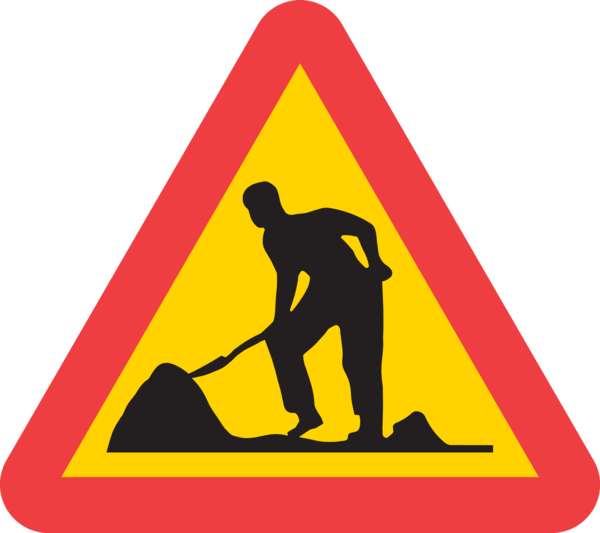
What do you prepare for?
In this area several risks come together: loose surface, erased or conflicting markings, a narrowing lane, unexpected obstacles and unprotected people at work. Focusing on one risk is not enough. You both reduce your speed and increase the side gap. If there are lights, officers, signs and markings, you assess them together.
When does the speed limit end?
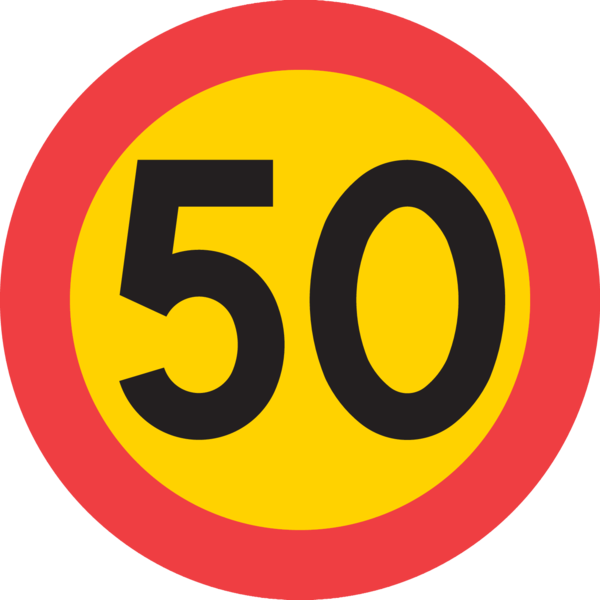
It lasts until you see an end sign or a new speed sign. The workers leaving, the machines stopping or the work looking finished does not end the limit. The surface and the markings may still be temporary.
If the limit is not enough
The speed limit is an upper limit, not a target. It does not mean you can pass through every gap at that speed. If workers are close to the lane or the road is narrowing, you choose a lower speed. If you cannot leave a safe side gap, you reduce your speed enough and, if needed, wait in a safe position. Not exceeding the limit does not make the passage safe by itself. A horn does not guarantee that workers will clear the way.
If a road worker says stop
If an authorised road worker (vakt) gives you the V1 stop signal facing you, you stop. Even if the road looks clear, and even if you do not want to wait. V1 is a stop instruction, not speed advice. You wait for a new valid instruction to proceed. Do not confuse this signal with the police authority, which is above all other instructions.
What the law says
Tecknet anger stopp för den trafikant vakten är vänd mot.Unofficial translation: The signal indicates stop for the road user whom the guard (vakt) is facing.
5 kap. 2 § vägmärkesförordningen
Try it yourself
2 questions from this lesson, no sign-in.
At roadworks, a controller facing you shows the stop signal (V1). At the same time, a police officer there waves you on. What do you do?
You follow the controller, but a police officer's instruction comes first.
The police signal applies, not whichever signal is more cautious.
You must follow a roadworks controller's signals (2 kap. 2 § trafikförordningen), but a police officer's instructions override them (2 kap. 3 §). So you drive on as the officer signals, keeping an eye on the work area.
When does a temporary speed limit at roadworks end?
The workers leaving does not end the limit; the sign is binding.
Visibly ending is not enough; a sign is required.
A temporary speed limit lasts until an end sign or a new speed limit sign is seen. There being no workers in the area, the machines having stopped or the work looking finished does not end the limit; the surface and markings may still be temporary. Removing the signs is a separate process.
More questions on this topic are in the app.