
Signs and signals · 3/17
- Warning signs
- Give-way signs
- Prohibitory signs
- Mandatory signs
- Information and regulation signs
- One-way road
- Direction signs
- Hierarchy of rules
- Information signs
- Level crossing
- Road markings
- Signals from officers
- Traffic lights
- Additional panels
- Reading times on an additional panel
- Road works area
- Road works equipment
Prohibitory signs
2 min read
A prohibitory sign applies from where it is placed to the next junction. An additional panel, an end sign or the sign's own rule may say something different.
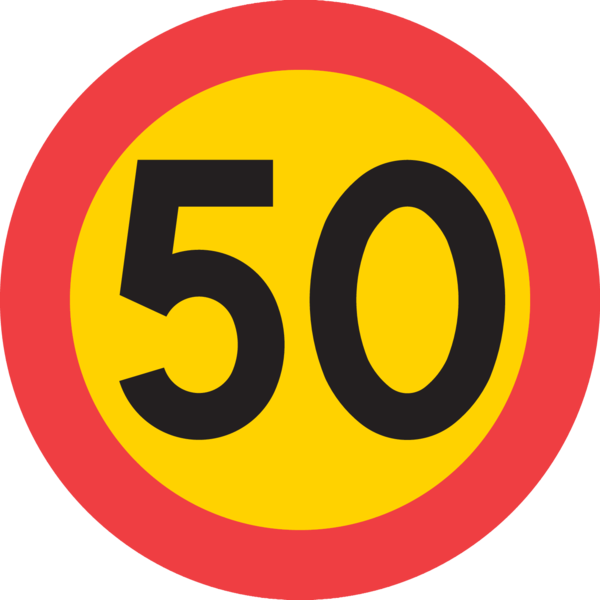
A prohibitory sign () is round with a red border. The background is mostly yellow, and blue for parking and stopping bans. A triangular sign with a red border is a warning, and a blue round sign is a mandatory sign.
Where does the ban end?
- At the next junction. A car park, property or footpath exit does not count as one of these junctions. If the ban continues after the junction, the sign is repeated.
- Earlier, if there is an additional panel T11 with a downward arrow, or an end sign.
- If it is placed together with a built-up area sign, it applies in the whole built-up area, unless stated otherwise for a specific road.
No entry
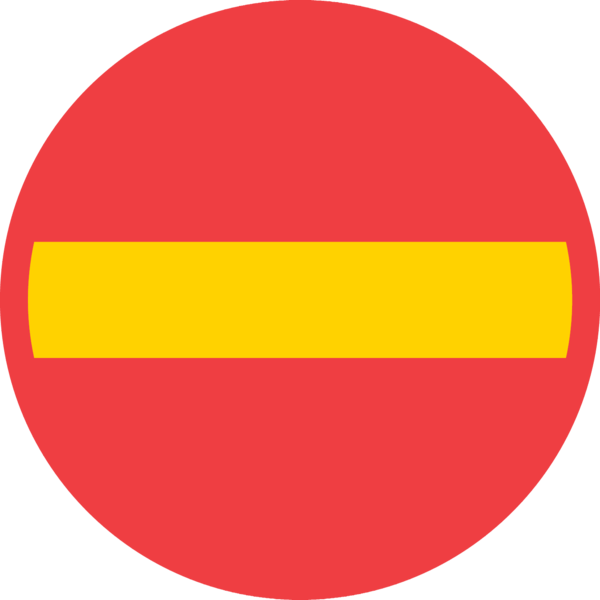
Your address being on that street does not give permission, so you look for another permitted route. The ban covers only the direction of entry. The road may be used from the other direction, but the sign alone does not prove that the street is one-way or that the other end is open. A sign that bans vehicle traffic in both directions is different (C2).
Parking or stopping?
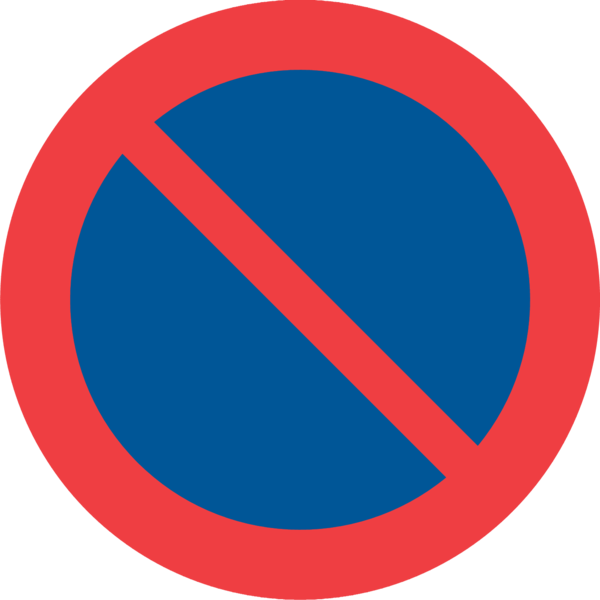
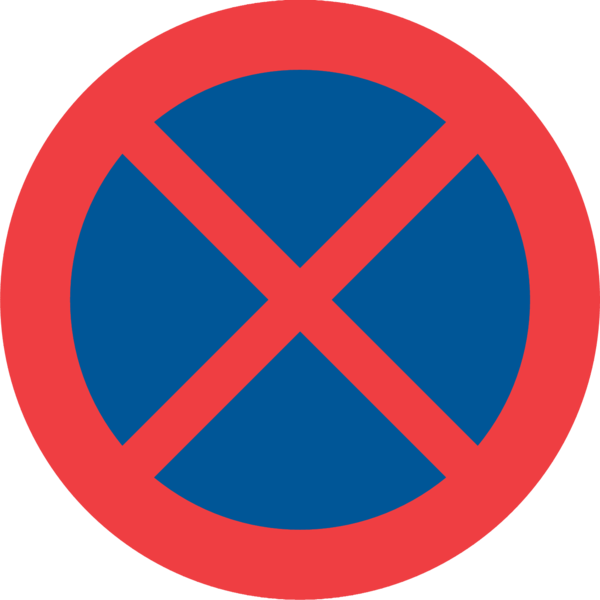
Beyond C35, you can stop at a safe place to let a passenger out. You cannot park. Staying in the vehicle does not remove the parking: waiting for shopping after the passenger has got out is not counted as stopping. Other stopping bans and the rules on danger still apply.
Ban by vehicle type
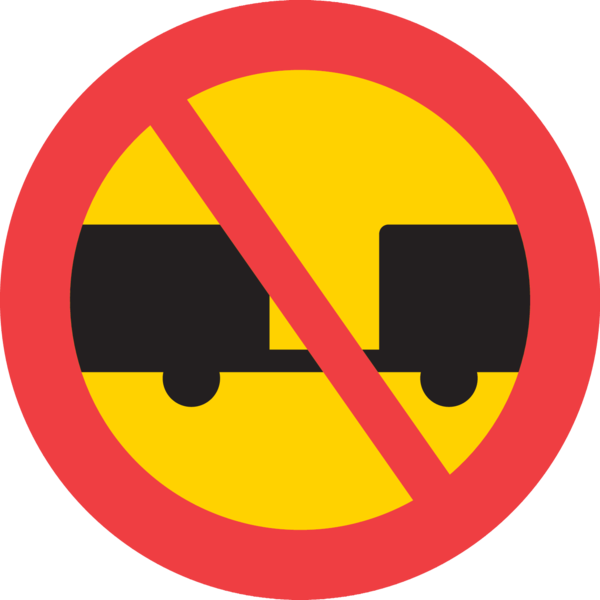
What the law says
En anvisning om förbud genom ett förbudsmärke gäller, om inte annat anges nedan eller i 8 §, från den plats där märket satts upp antingen till nästa korsning med en annan väg än sådan som avses i 3 kap. 21 § andra stycket trafikförordningen (1998:1276) eller till den plats dessförinnan där ett motsvarande märke med tilläggstavla T11, utsträckning, med nedåtriktad pil eller ett slutmärke har satts upp.Unofficial translation: An instruction on a ban given by a prohibitory sign applies, unless otherwise stated below or in 8 §, from the place where the sign is put up either to the next junction with a road other than one referred to in 3 kap. 21 § second paragraph of the trafikförordningen (1998:1276), or to the place before that where a corresponding sign with additional panel T11, extent, with a downward arrow, or an end sign has been put up.
2 kap. 7 § vägmärkesförordningen
Try it yourself
2 questions from this lesson, no sign-in.
You pass signs for 50 km/h and no parking. You then drive straight through an ordinary junction with no new signs. What applies after the junction?
The parking ban on the sign only applies up to the next junction.
The speed limit carries on past the junction until another sign changes it.
A prohibitory sign normally applies up to the next junction, and that is the case with the parking ban. The speed limit is an exception: it applies until another sign changes or ends it.
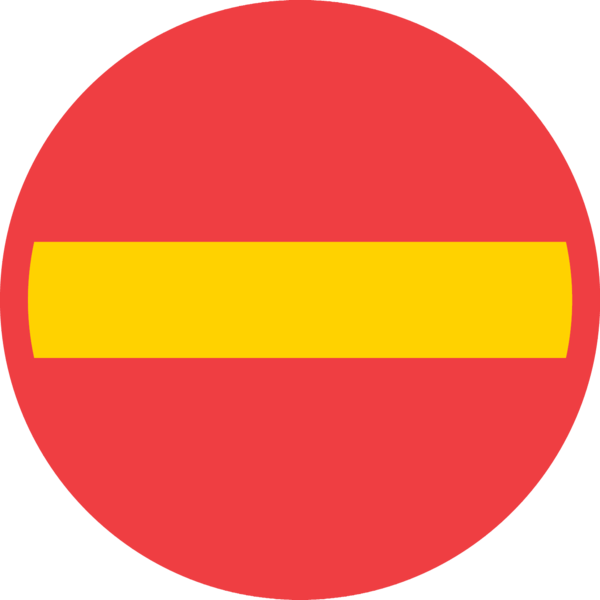
The sign in the picture is at the entrance to a street. What does it mean?
Without an additional panel, the ban also covers cycles.
A different sign, C2, bans traffic in both directions.
Sign C1 prohibits vehicles from entering from the side where the sign stands, often because the street is one-way. Unless an additional panel says otherwise, the ban applies to all vehicles, including cycles. Traffic in both directions is prohibited by a different sign, C2.
More questions on this topic are in the app.