
Signs and signals · 10/17
- Warning signs
- Give-way signs
- Prohibitory signs
- Mandatory signs
- Information and regulation signs
- One-way road
- Direction signs
- Hierarchy of rules
- Information signs
- Level crossing
- Road markings
- Signals from officers
- Traffic lights
- Additional panels
- Reading times on an additional panel
- Road works area
- Road works equipment
Level crossing
2 min read
You do not enter the crossing if a train is approaching, if there is a red light or a sound, if the barrier is moving or down, or if you risk being stuck on the crossing.
You take special care before a level crossing (). You adjust your speed so you can stop before the crossing. If you must not enter, you stop at a safe distance from the crossing, before the lights and barriers.
Signs
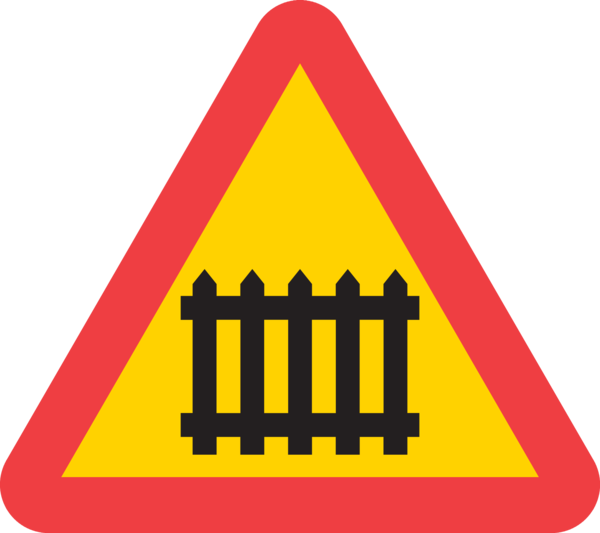
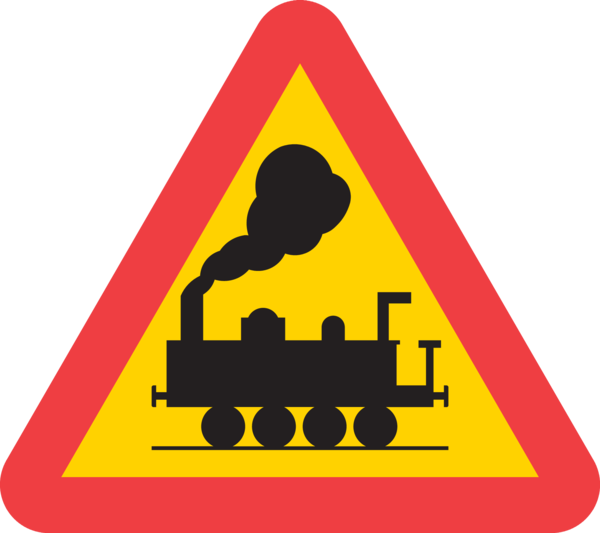
The Kryssmärke (cross sign, A39) stands right in front of the crossing and shows a railway or tram crossing.
If the barrier starts to come down
You stop. You do not enter the crossing while the barrier is coming down, is down or is rising. There being space on the other side does not change this, and the ban does not wait for the barrier to close fully. Going under it or speeding up to make it is forbidden and puts lives at risk. Even if the train looks far away, its braking distance is long and it cannot swerve.
If there is no barrier or light
The checking is up to you. You slow down, look both ways and, if needed, open the window and listen. You see that there is space on the other side, and you stop if needed. No equipment does not mean no train is coming.
Traffic ahead
Even when the light is off, you make sure you can get out the other side without any risk of being stuck on the crossing. The movement of the vehicle ahead does not guarantee exit space. If there is a risk, you do not enter.
If you get stuck on the tracks
If the vehicle cannot be moved at once, you first get the people away from the tracks. You call for help to warn the train and stop traffic. Staying in the vehicle leaves the passengers in danger. Saving the vehicle does not come before people's safety.
What the law says
En trafikant får inte färdas in i en korsning med järnväg eller spårväg 1. om ett tåg eller en spårvagn närmar sig, 2. när en ljussignal visar rött sken, en ljudsignal ljuder eller en bom fälls, är fälld eller reses, eller 3. om det finns risk för att trafikanten måste stanna i korsningen.Unofficial translation: A road user may not drive into a crossing with a railway or tramway 1. if a train or a tram is approaching, 2. when a light signal shows a red light, a sound signal sounds or a barrier is being lowered, is lowered or is being raised, or 3. if there is a risk that the road user will have to stop in the crossing.
2 kap. 7 § trafikförordningen
Try it yourself
2 questions from this lesson, no sign-in.
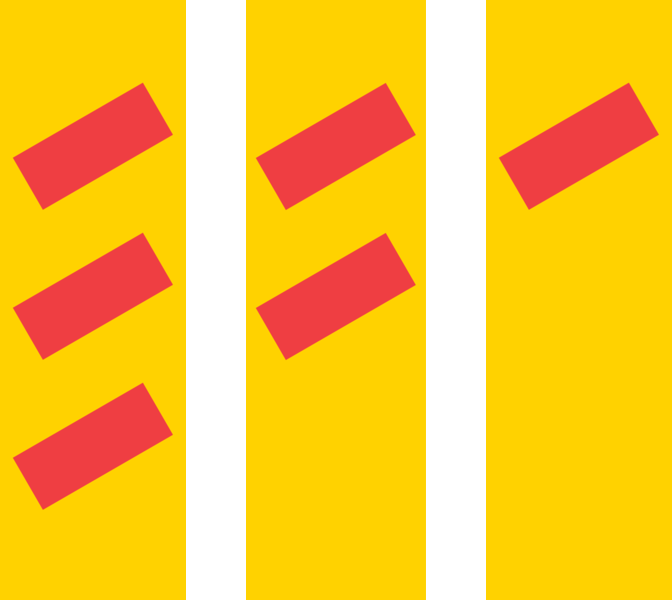
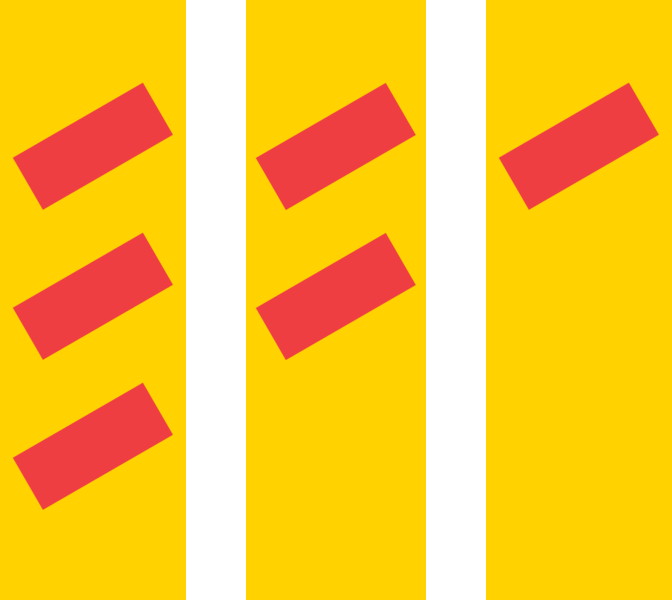
The picture shows signs you pass in order, from left to right. What does the number of bars show?
A38 does not show the number of tracks.
The bars divide the distance into thirds, not 100-metre steps.
The A38 signs show the distance to the level crossing in thirds: three, two, then one bar. The bars show neither metres nor the number of tracks. Adjust your speed so that you can stop before the crossing (2 kap. 7 § trafikförordningen).
At a level crossing, the barriers have started to come down and you have not yet driven onto the tracks. What do you do?
Driving under the barrier is prohibited and directly puts lives at risk.
The barriers moving starts the prohibition; speeding up to cross is not allowed.
When the red light comes on, the bell sounds or the barriers start to come down, you must not enter the level crossing; the driver stops at a safe distance from the crossing, before the lights and barriers. Even if the train seems far away, its braking distance is long and it cannot move out of the way. Driving under the barrier or speeding up to beat the train is prohibited and puts lives at risk.
More questions on this topic are in the app.