
Giving way · 11/14
Stop sign
2 min read
At a stop sign you stop, even if the road is completely empty.
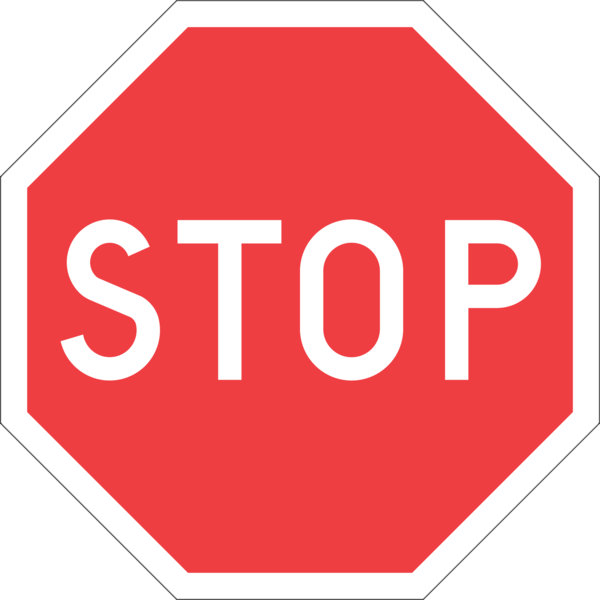
Where do you stop?
If there is a , you stop there. If there is no line, you stop before entering the crossing road. The position of the sign does not decide where you stop.
For how long do you stop?
The law gives no time. Slowing right down does not count as stopping: the vehicle must stop.
After you have stopped
The obligation to give way also applies: you look at the position, distance and speed of the others. You carry on only if no danger or obstruction will arise.
If your view is blocked
First you stop at the stopping point. If your view is still blocked, you creep forward very slowly, and stop again if needed, but only if you do not endanger or obstruct crossing traffic. You do not enter the junction without seeing.
Common mix-ups
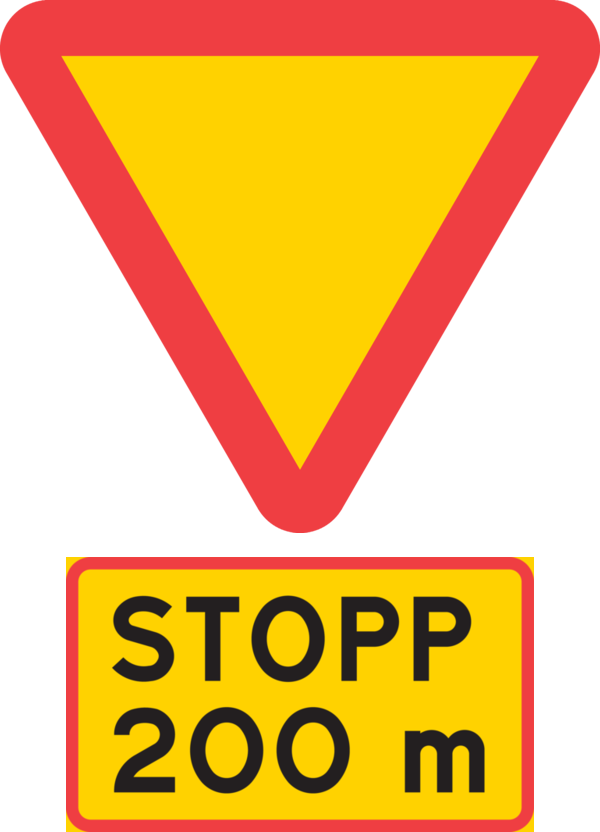
- At a give-way sign you stop only if necessary. At a stop sign you stop even if the road is empty.
- You meet the duty to stop by stopping the vehicle, not by sounding the horn.
- A police officer's instruction and a steady traffic light override a stop sign.
What the law says
En förare som har stopplikt eller skall stanna på grund av trafiksignal skall stanna vid stopplinje. Om stopplinje saknas skall föraren stanna omedelbart före signalen eller innan föraren kör in på den korsande vägen, leden eller spårområdet.Unofficial translation: A driver who has an obligation to stop, or must stop because of a traffic signal, must stop at the stop line. If there is no stop line, the driver must stop immediately before the signal or before driving onto the crossing road, route or track area.
3 kap. 19 § trafikförordningen
Try it yourself
2 questions from this lesson, no sign-in.
There is a stop sign at the junction but no stop line. Where do you stop?
What counts is where the other road begins, not where the sign stands.
A stop sign requires a stop even when there is no stop line.
Under 3 kap. 19 § trafikförordningen, you stop at the stop line or, if there is none, immediately before you enter the other road. A stop sign means you must stop even where there is no line. The sign itself often stands some way before the junction.
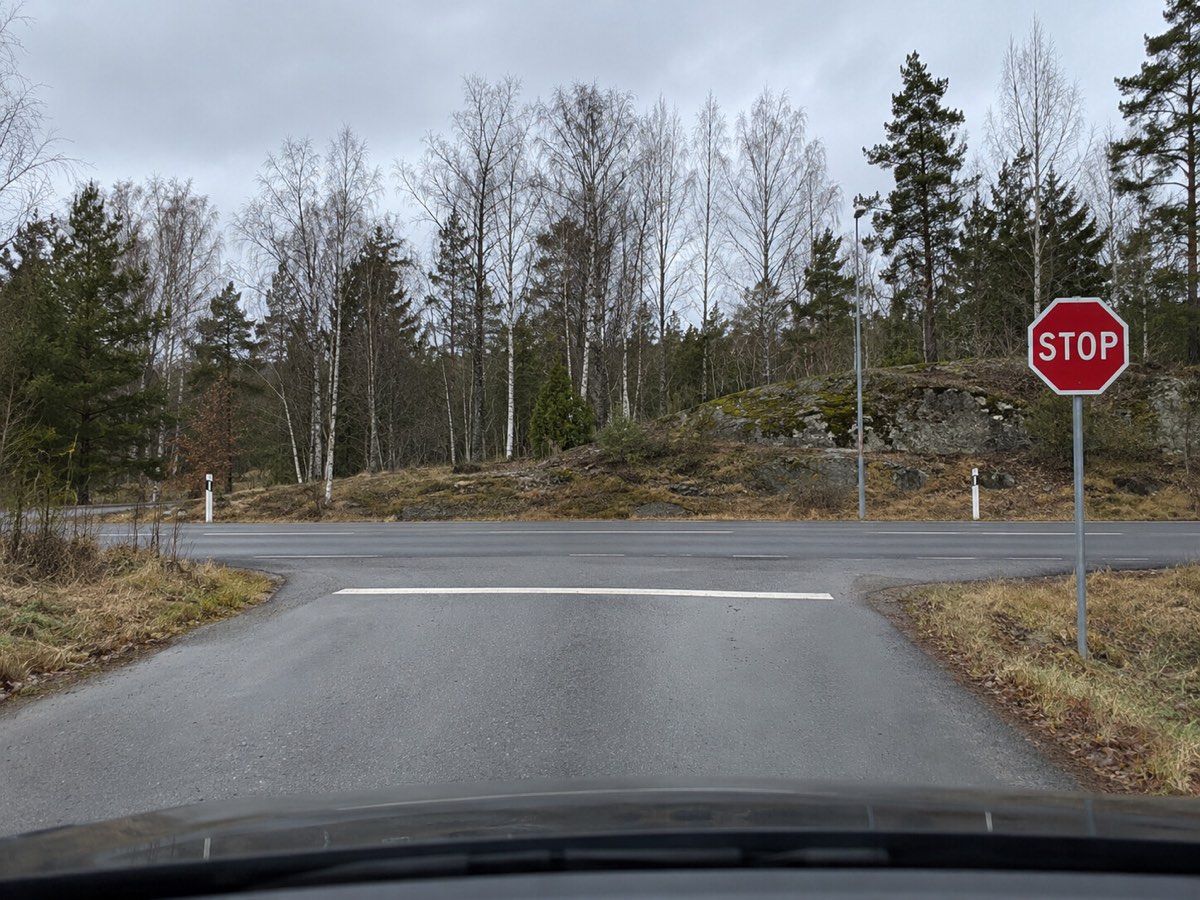
You are approaching the junction in the photo. What do the sign and the line require of you?
Rolling at walking pace is not a stop, because the wheels are still turning.
The law requires a full stop but no fixed waiting time.
At a stop sign with a stop line, you must bring the car to a complete stop at the line, even when the road is empty (3 kap. 19 § trafikförordningen). There is no set waiting time. Once you have stopped, drive on as soon as you can do so safely without getting in anyone's way.
More questions on this topic are in the app.