
Giving way · 5/14
Pedestrian street and walking-pace area
2 min read
In a pedestrian street and in a walking-pace area you do not exceed walking pace, you give way to pedestrians, and you do not park.
The Swedish term for pedestrian street is , and for walking-pace area .
The key difference: can you enter?
| Subject | Pedestrian street | Walking-pace area |
|---|---|---|
| Entry by motor vehicle | Forbidden as a rule | Allowed |
| Speed | Walking pace | Walking pace |
| Pedestrians | Given way to | Given way to |
| Parking | Forbidden | Forbidden |
30 km/h is not the limit in these areas.
When may you enter a pedestrian street?
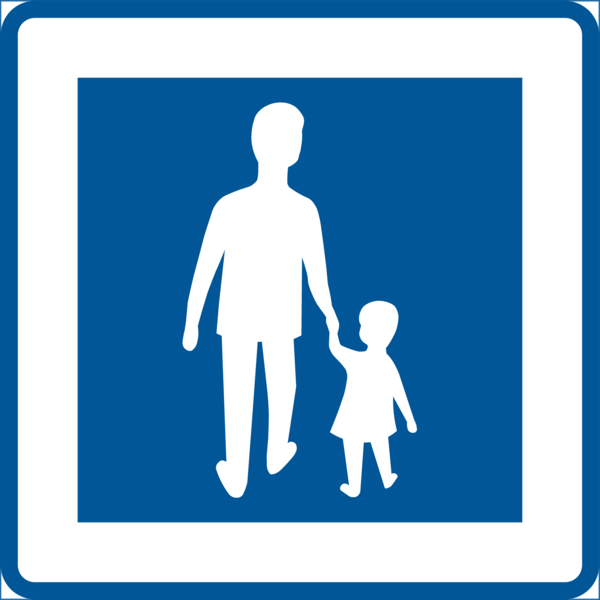
You enter by motor vehicle only to cross it. You may also enter, if needed, for these kinds of transport:
- Delivering goods to shops
- Transporting goods or residents to an address on the street
- Taking guests to a hotel
- Transporting a sick or disabled person
Taking a shortcut is not one of these, and driving at walking pace is not permission. Even where you may enter, the walking pace and pedestrian rules apply.
Giving way to pedestrians
A pedestrian does not need to be on a pavement or crossing. They may be walking in your path. You do not sound the horn to make them move aside. You wait until you can move safely.
Parking
The absence of pedestrians or a short shopping stop does not lift the ban. In a walking-pace area, if a place is marked with a P sign, you may park only there: the sign overrides the general rule. Parking is forbidden in the rest of the area.
When leaving the area
When you drive out onto a road, you give way to every vehicle whose path you cross, including those from the left. Pedestrian priority inside the area gives you no vehicle priority.
What the law says
På en gågata och i ett gångfartsområde gäller följande. 1. Fordon får inte föras med högre hastighet än gångfart. 2. Fordon får inte parkeras. 3. Fordonsförare har väjningsplikt mot gående.Unofficial translation: In a pedestrian street and in a walking-pace area the following applies. 1. Vehicles must not be driven faster than walking pace. 2. Vehicles must not be parked. 3. Vehicle drivers must give way to pedestrians.
8 kap. 1 § trafikförordningen
Try it yourself
2 questions from this lesson, no sign-in.
You are in a walking-speed area with parking spaces marked P. Which plan is right?
The driver must give way to pedestrians here, not expect them to give way.
Giving way to pedestrians is right, but walking speed applies rather than a general 30 km/h limit.
Do not drive faster than walking speed and give way to pedestrians. The area generally prohibits parking, but marked P spaces are explicitly allowed here; the permission applies at those places and under those conditions. 30 km/h is not this area’s general limit, and the rule sets no exact walking-speed figure.
You are leaving a walking-pace area and turning left onto an ordinary street. A car is approaching along the street from the left. Which is correct?
Leaving the area overrides priority to the right, so you give way to the car.
You must give way when leaving, and only stop if you need to.
When you drive out onto a road from a walking-pace area, you must give way to every vehicle whose path crosses yours (3 kap. 21 § trafikförordningen). Priority to the right does not apply here, and the rule makes you give way, not stop.
More questions on this topic are in the app.