
Vulnerable road users · 2/5
Animals on the road
2 min read
If you see an animal, you slow down and are ready to stop. After one elk, others may follow.
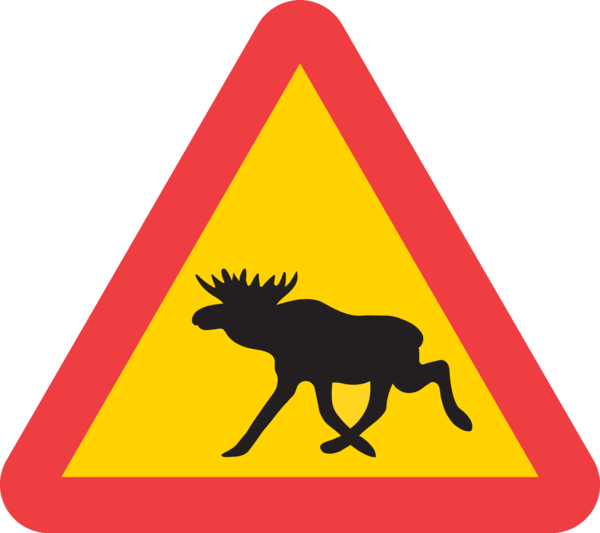
When is there a risk?
The risk of wild animals exists all year, not only in the hunting season. At dawn and dusk you take special care. You adapt your speed to the view and the risk, and you scan the roadsides. Not seeing an animal does not show that hidden areas are empty. Main beam or a horn does not replace adapting your speed.
When you see an animal
An animal at the roadside can step onto the road, and you do not assume it will stay where it is. A horn does not guarantee where it will go. Wild animals often move in herds or follow one another. Whether or not an elk steps onto the road, or crosses it, others may come after it. After it has passed, you do not speed up at once, and you drive for a while longer at low speed and with care. The mother of a lone young animal is also often nearby.
If hitting a large animal cannot be avoided
The Swedish word for this accident is . If you are braking hard, you release the brake just before the moment of impact. In hard braking the front of the vehicle dips, and the animal can come over the bonnet onto the windscreen. Releasing the brake lifts the front, and this possibility falls. Avoiding it by steering creates a risk of skidding and going into the opposite lane.
Dogs and horses
- If there is a loose dog on the road, you reduce speed in a controlled way and prepare to stop. The small size of the animal does not make swerving into the opposite lane or towards the pedestrian side safe. You do not create a new hazard for those around.
- On a narrow road, if someone is leading a horse, there is no safe sideways gap and a vehicle is coming, you slow down and wait behind. When there is enough space, you pass with care. Staying in your lane does not provide the gap, and a horn does not clear the way.
Try it yourself
2 questions from this lesson, no sign-in.
You plan to drive a rural road by woodland at dusk. Which wildlife-risk plan is right?
The source states year-round risk, not risk confined to hunting season.
Absence of a visible animal does not establish empty obscured areas.
Trafikverket stresses dawn and dusk, but animal risk exists year-round and at other times too. Choose speed for visibility and foreseeable hazards and monitor verges. Not seeing an animal does not exclude one. Other seasons or times provide no safety guarantee; this question gives no collision percentage.
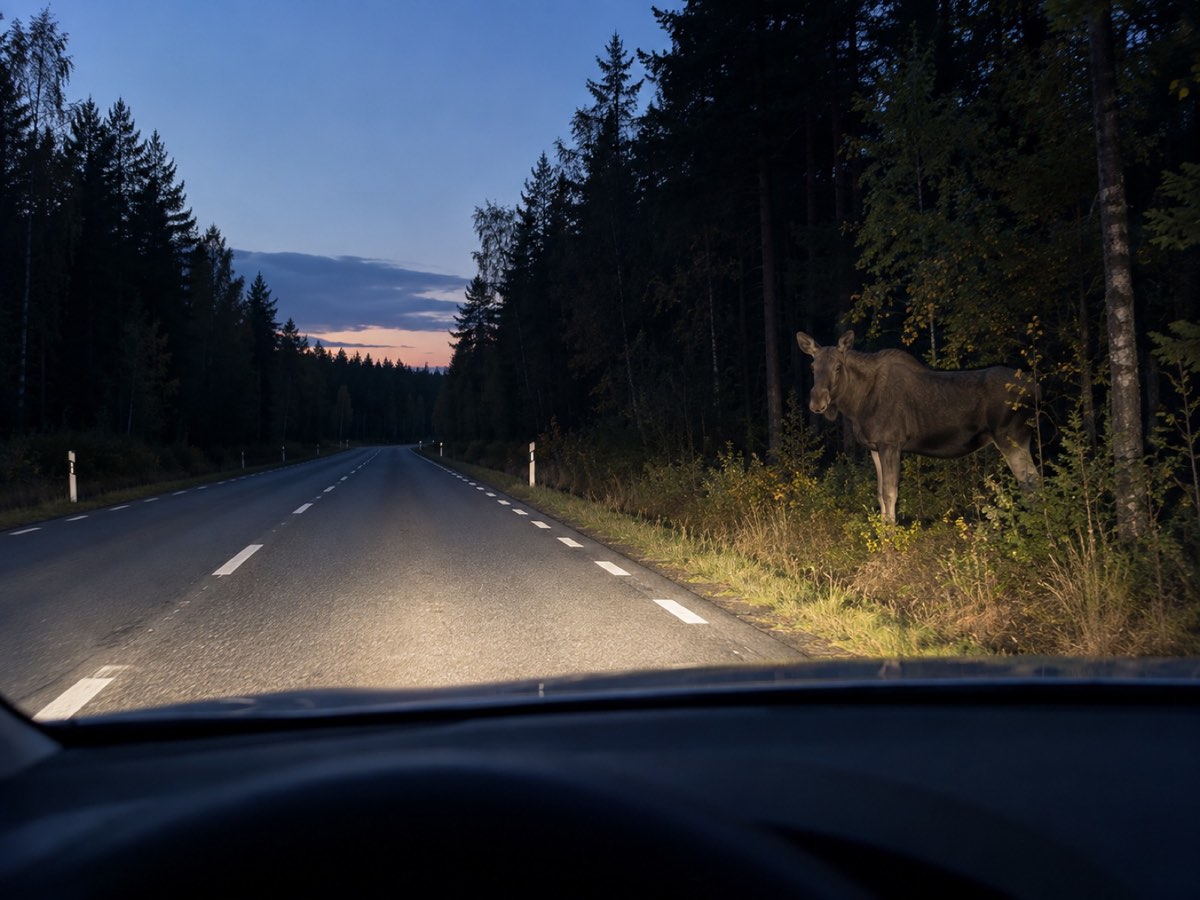
What do you do in the situation shown?
The animal can step out just as you pass it; do not speed up.
The animal could end up anywhere on the road; only a low speed protects you.
A large animal at the roadside can step out at any moment, and as animals often move in groups, more may follow. Keep your speed low enough to stop before any obstacle you can foresee (3 kap. 14 § trafikförordningen).
More questions on this topic are in the app.